
Level 1 sweep and inspection to the NFPA 211 annual standard - flue, crown, cap, and flashing checked and photographed
Chimney sweep logs do not sweep chimneys. They loosen some creosote - which then falls where a brush and vacuum still have to collect it.
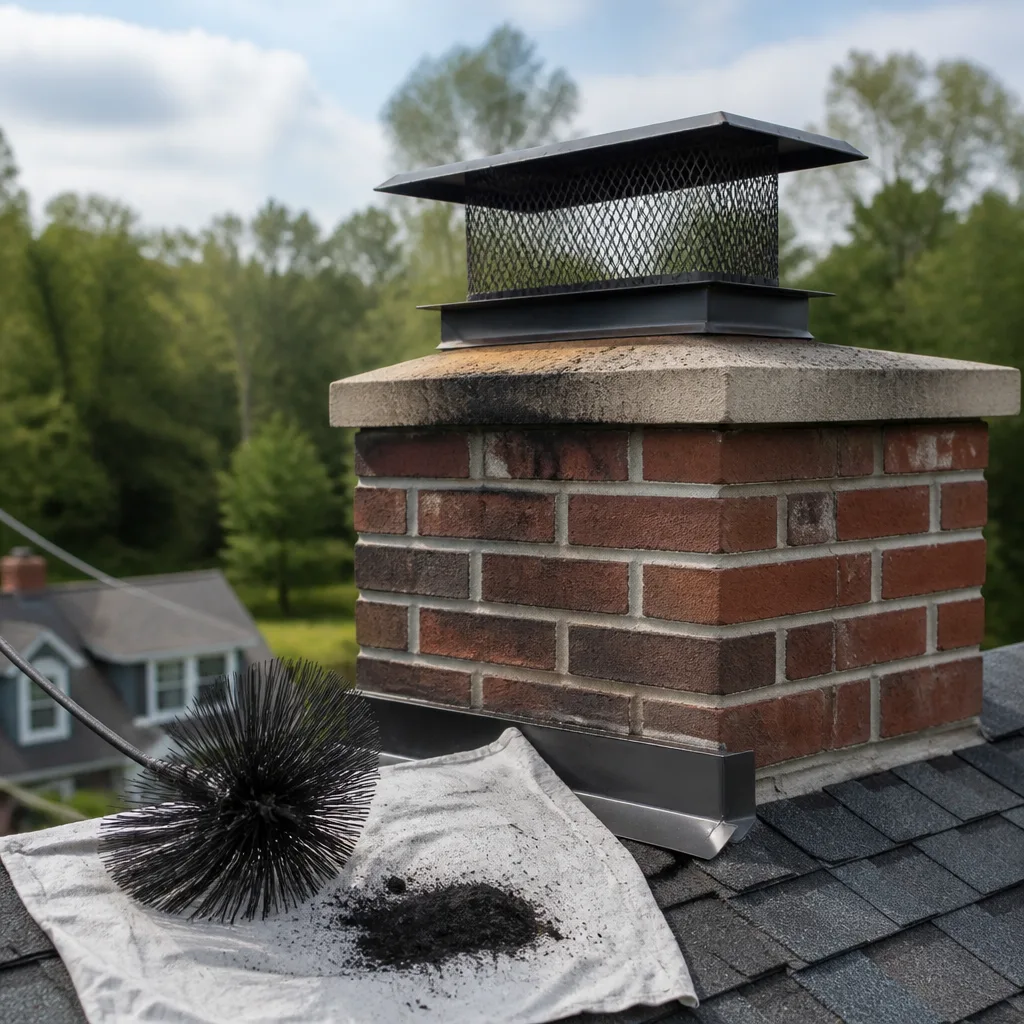
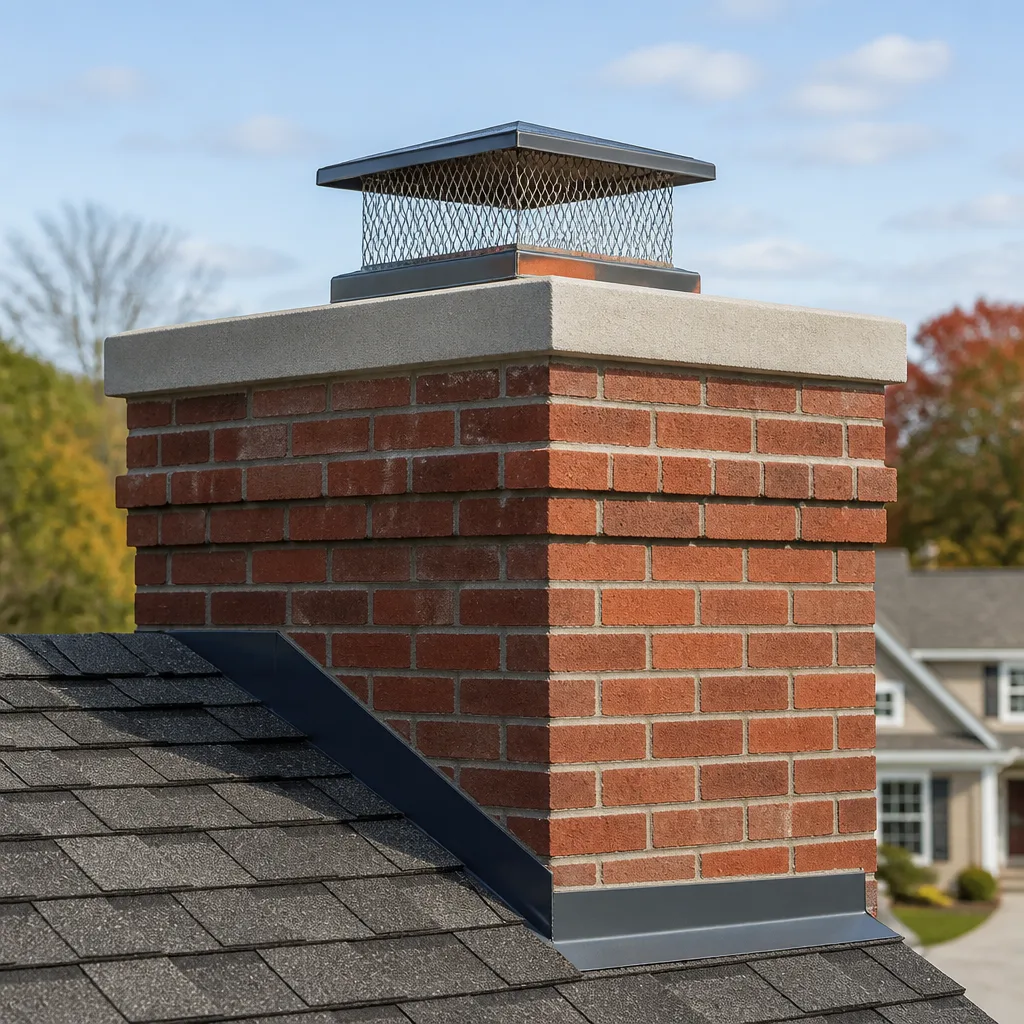
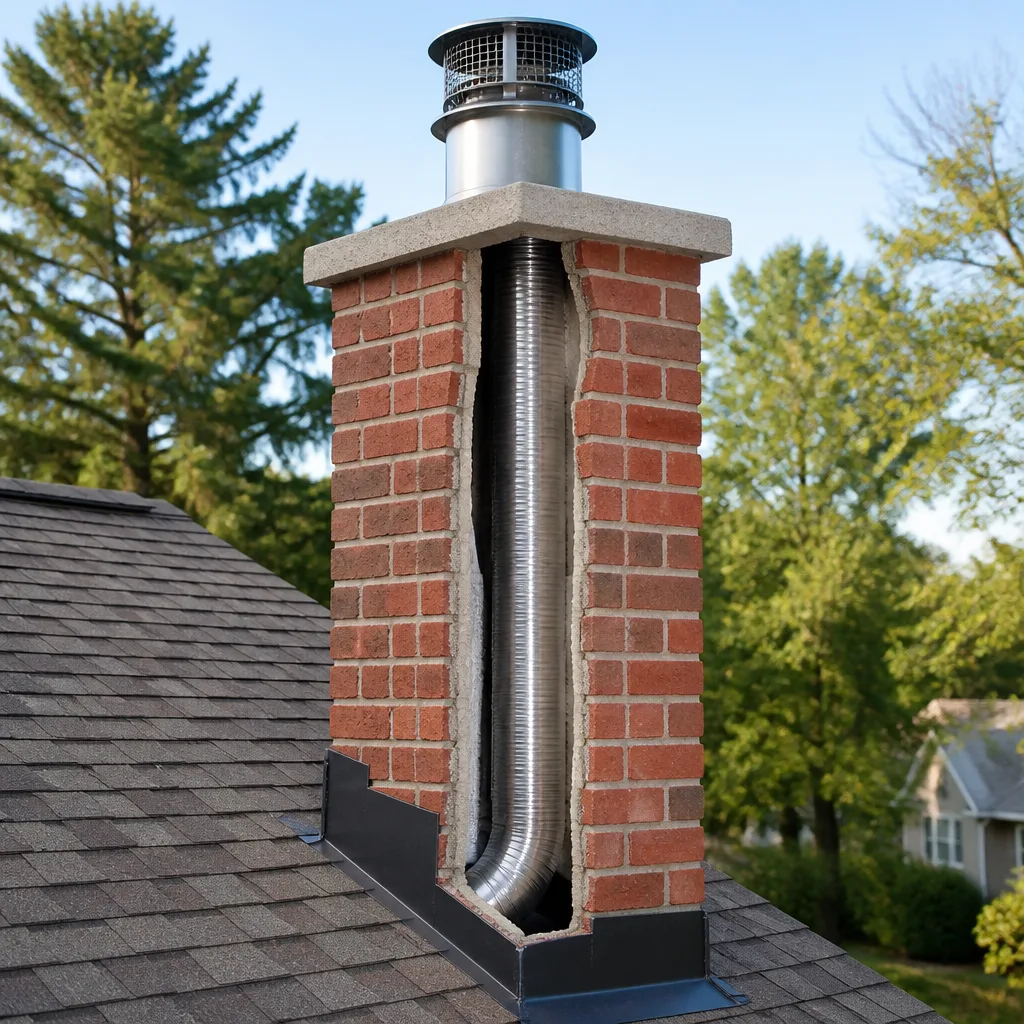
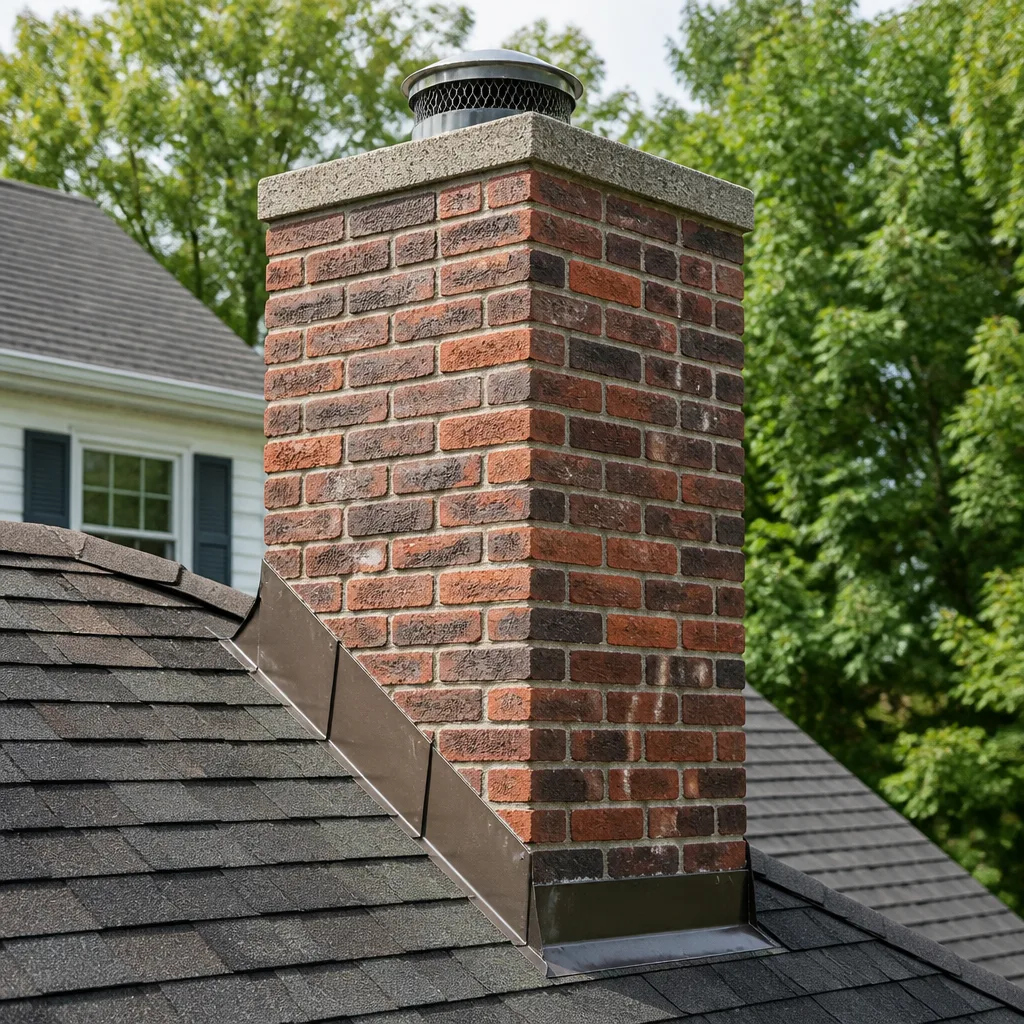
 Before
 After
After Before
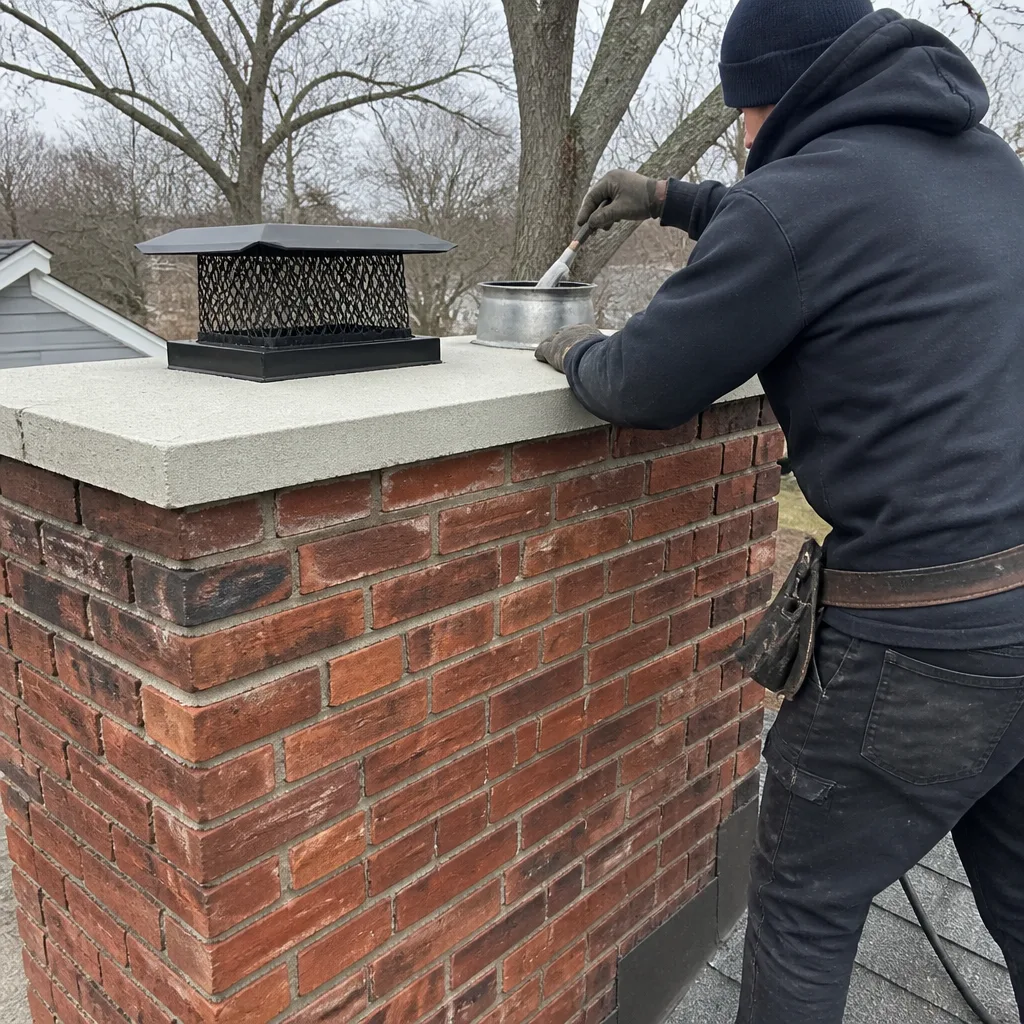 After
After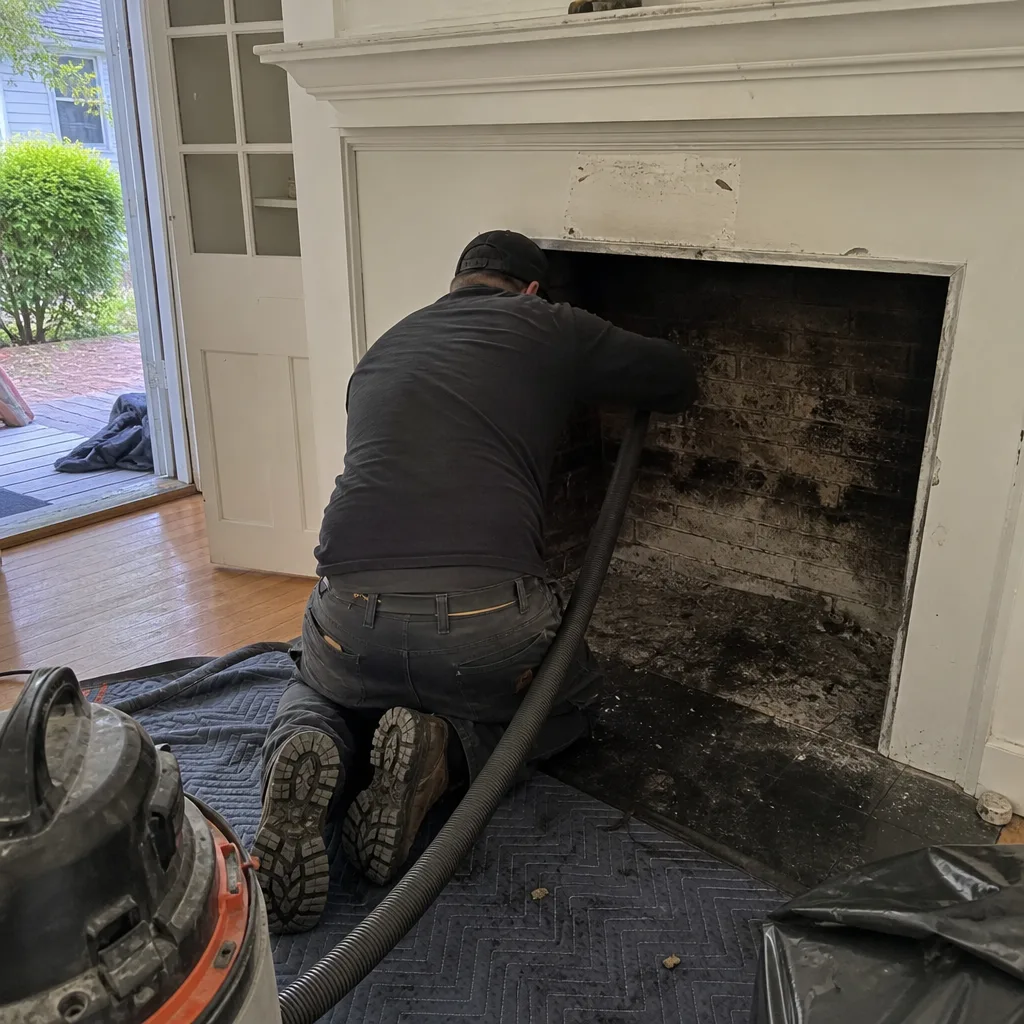 Before
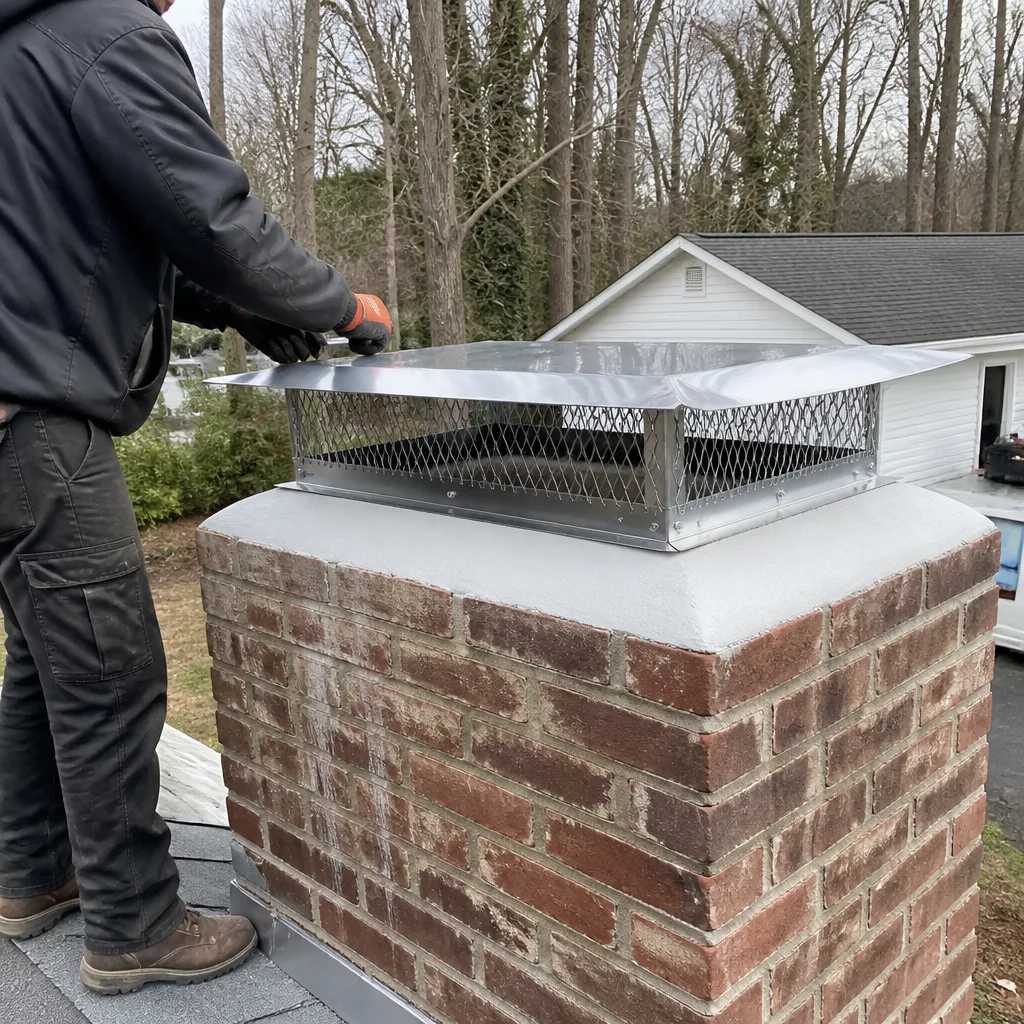 After
AfterCreosote Removal in Southampton, NY
Creosote removal in Southampton typically runs between $150 and $600, depending on how much buildup is present and which stage of creosote you’re dealing with. Most appointments take a single visit, and our technicians leave with the flue clear, documented, and ready to use safely.
If you’ve been burning wood in your fireplace for more than a season or two without Fireplace Cleaning, creosote is almost certainly present. That’s not a scare tactic – it’s simple chemistry. Wood smoke condenses on the cooler surfaces of your flue liner as it travels upward, and what’s left behind hardens into a carbon-based residue that burns at temperatures above 2,000 degrees Fahrenheit. In Southampton’s older homes, many of which were built with masonry chimneys in the mid-twentieth century and haven’t had a thorough inspection since the last owners lived there, we see advanced creosote buildup more often than people expect.
At Hearthstone Chimney Co., we’ve been handling this specific problem since 1984. Russell Haines leads our team, and the standard he set from the beginning hasn’t changed: document everything with photos, explain the findings in plain English, and stand behind the work in writing. If you’d like to know what you’re working with before any money changes hands, call us at (516) 619-2915 – a live person answers every hour of every day. You can also read more about our full Chimney Cleaning & Sweep in Southampton services to understand how creosote removal fits into a broader annual maintenance plan.
When You Need Creosote Removal
Creosote doesn’t announce itself. Most homeowners don’t know it’s become dangerous until a Chimney Cleaning & Sweep services professional shines a light up the flue and shows them the photos. Here are the situations that tell us, clearly, that a targeted creosote removal is overdue:
- A strong, acrid odor from the fireplace – especially in summer. Southampton’s humid coastal summers pull air down through the chimney rather than up, which carries creosote smell directly into the living space. If your fireplace smells like a campfire in July, the deposits are significant enough to off-gas at room temperature.
- Visible black or brown residue on the firebox walls or damper. A thin grey ash layer is normal. Shiny black tar, flaking chunks, or a crunchy brown crust on the damper plate are all forms of creosote at different stages – and each one calls for a different removal method.
- Reduced draft or a fireplace that smokes into the room. Heavy third-stage creosote can physically narrow the flue opening enough to choke airflow. If your fire doesn’t draw the way it used to, blockage is a likely cause.
- You’ve been burning unseasoned or “green” wood. East End of Long Island homeowners who use fallen oak or cherry from their own property sometimes burn it before it’s properly dried. Wood with high moisture content creates far more creosote per fire than seasoned hardwood does.
- It’s been more than two years since a professional cleaning. The National Fire Protection Association standard (NFPA 211) calls for annual inspection of any chimney in use. After two or more seasons without service, especially in a house that burns wood regularly from October through April, creosote accumulation is the rule, not the exception.
- A previous inspector flagged stage-two or stage-three creosote. If you have a written report noting honeycomb creosote or glazed tar deposits, those designations mean standard brush cleaning won’t touch them. Chemical treatment or mechanical removal is required, and that work needs a technician who knows the difference.
Our Creosote Removal Process
No two flues are exactly alike. A 1960s brick chimney on Jobs Lane in Southampton Village behaves differently from a prefabricated metal-insert system in a newer home in Tuckahoe. Our process is structured enough to be reliable and flexible enough to handle what we actually find.
- Visual and camera inspection first. Before we touch a brush or apply any chemical, we run a Level-2 camera inspection of the flue. You see the photos. We tell you exactly what stage of creosote is present, where the heaviest deposits are, and whether there are any cracks or liner damage that the creosote may be hiding. That information shapes every decision we make after this point.
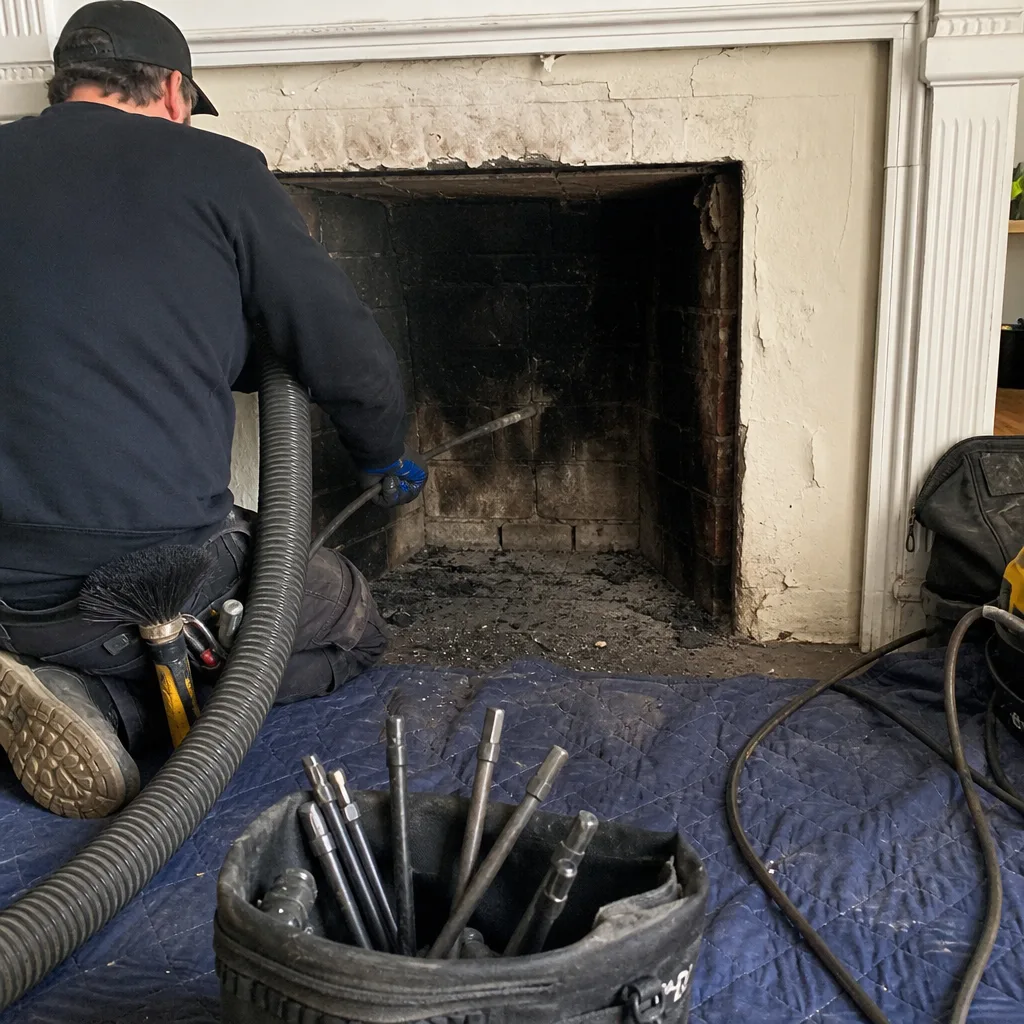
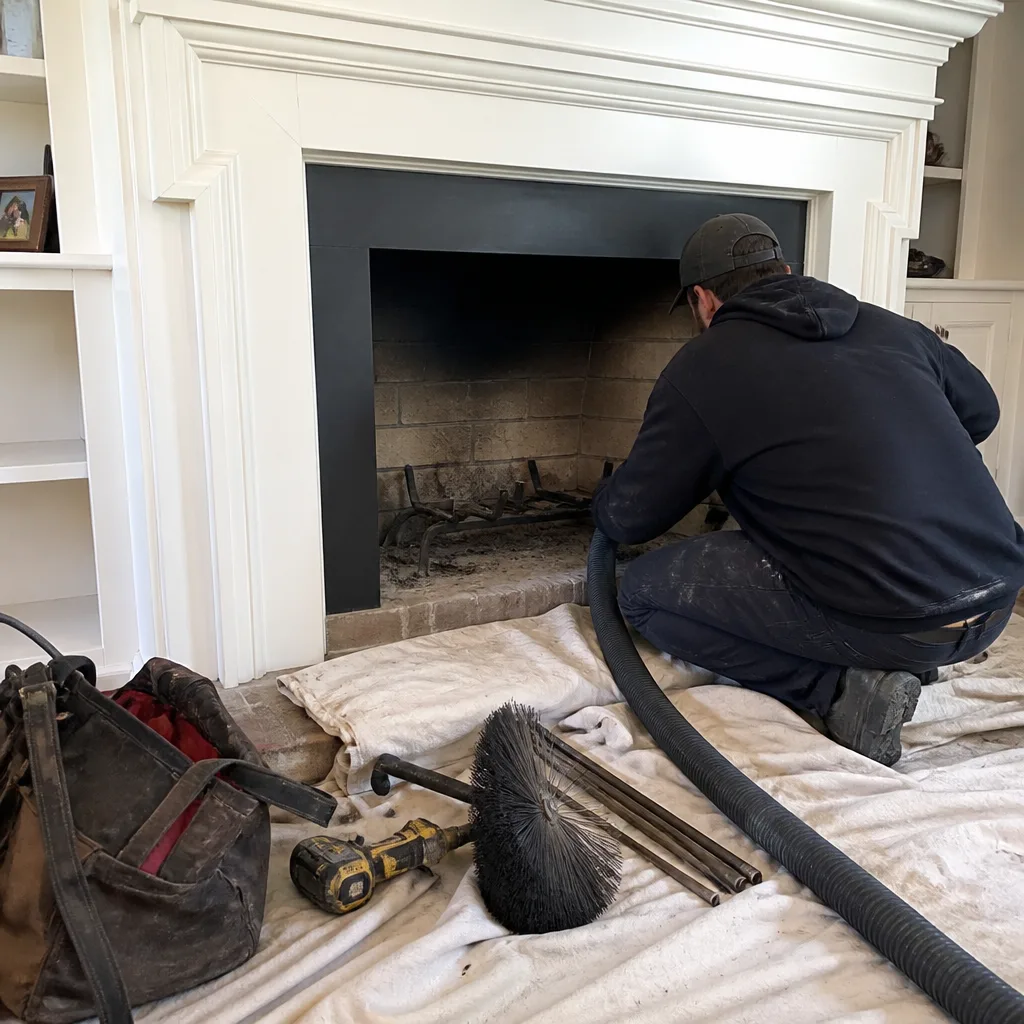
- Protecting your home. Our technicians lay drop cloths, seal the firebox opening with a dust barrier, and set up a HEPA-filtered vacuum before any cleaning begins. We’ve been in enough Southampton homes to know how quickly fine soot can travel through a house if you don’t contain it from the start.
- Stage-appropriate removal. First-degree creosote – the dry, flaky kind – comes out with professional-grade rotary brushes and hand tools. Second-degree honeycomb deposits require more aggressive mechanical work and, in many cases, a chemical creosote modifier applied to break down the structure before brushing. Third-degree glazed creosote, the shiny tar-like coating that forms when a flue runs chronically cool, requires a multi-step chemical treatment process using products from lines like Copperfield and Gelco – the same professional-grade materials specified by certified chimney professionals, not the consumer-grade sprays sold at hardware stores. We don’t cut that corner.
- Liner and firebox cleaning. Once the creosote is addressed, we clean the full length of the liner, the smoke shelf, the damper, and the firebox. Ash and debris are bagged and removed from your property.
- Post-cleaning camera documentation. We run the camera again after the work is complete. You can see the before and after images side by side. A plain-English verdict: the flue is clear, or here’s what still needs attention and why.
- Written summary and 90-Day Done Right Promise. Every job leaves your home with a written record of what was done and our 90-Day Done Right Promise attached to it. If something isn’t right within 90 days, we come back. No arguing, no paperwork, no run-around. That’s the standard Russell Haines built this company on, and it hasn’t changed in over 42 years of serving Southampton.
Creosote Removal Pricing in Southampton
Creosote removal in Southampton costs between $150 and $600 for most residential chimneys. The range is wide because the work involved varies significantly based on what stage of creosote is present and how much of the flue is affected. Here’s how we break it down:
| Service | Typical Range (Southampton) |
|---|---|
| Standard cleaning with light first-degree creosote | $150 – $250 |
| Second-degree creosote removal (mechanical + chemical treatment) | $250 – $425 |
| Third-degree glazed creosote removal (multi-session chemical process) | $425 – $600+ |
| Level-2 camera inspection (included with full cleaning) | Included |
| $89 Seasonal Tune-Up (inspection + standard sweep) | $89 flat |
A few things affect where your job lands in that range. Chimney height matters – taller flues in the larger homes along Gin Lane or north of Montauk Highway take longer to brush and inspect from top to bottom. Flue shape matters too: rectangular clay-tile liners and round stainless liners each require different tool sets. And the number of fireplaces connected to a single chimney stack, which isn’t unusual in older Southampton estates, affects both labor time and material use.
What doesn’t change: the number on your estimate is the number on your invoice. Upfront pricing isn’t something we advertise as a feature and then footnote away – it’s how we’ve done business since 1984. If you’re a senior or a veteran, a 5% discount applies automatically. And if another chimney company has already handed you a written estimate, we’ll give you a free second opinion before you commit to anything.
For an exact quote, call (516) 619-2915. Estimates are free, and a live person picks up every time.
FAQs – Creosote Removal
How do I know what stage of creosote I have?
The only reliable way to know is a camera inspection of the flue – what you can see from the firebox opening tells you very little about conditions eight or twelve feet up the liner. First-degree creosote is dry and dusty, grey-brown in color, and brushes out in a single visit. Second-degree has a honeycomb or flaky tar texture and typically requires both mechanical and chemical treatment. Third-degree is the most serious: a hard, shiny glaze that bonds tightly to the liner and, in severe cases, can actually restrict the flue diameter enough to affect draft and create a significant fire hazard. During our Level 2 Inspection, we show you photos and tell you exactly which stage is present and what it will take to address it. Call (516) 619-2915 and we can schedule that inspection at a time that works for you.
Is creosote removal dangerous – should I attempt it myself?
Third-degree creosote removal is not a DIY project, and we say that plainly because the stakes are real. Glazed creosote is extremely flammable, and disturbing it without proper containment can release fine carbon particles throughout your home. The chemical agents used to treat it need to be applied correctly, allowed to cure for a specific period, and then removed mechanically – a process where an error in sequencing can leave deposits that are now more brittle and more likely to ignite. First-degree creosote brushing carries lower risk, but without a camera inspection first, you don’t know what stage you’re dealing with. Our technicians are background-checked, trained, and equipped with HEPA vacuum systems designed for exactly this work. The cost of a professional removal is small compared to the cost of a chimney fire in a Southampton home.
How often does creosote removal need to happen?
For a wood-burning fireplace used regularly through a Southampton winter – say, three or four fires per week from November through March – an annual professional cleaning is the right interval. If you burn less frequently, every two years may be sufficient, but only a Level 1 Inspection can confirm that. Two variables that accelerate buildup faster than most homeowners expect: burning wood that hasn’t been seasoned for at least twelve months, and using a fireplace insert or wood stove that runs at lower flue temperatures to conserve heat. Both conditions produce significantly more creosote per fire. We’ll tell you honestly at the end of every visit where things stand and what interval makes sense for your specific setup.
What happens if creosote removal reveals liner damage underneath?
This comes up more often than people expect, particularly in Southampton’s older brick chimneys where the clay tile liner has been in place for forty or fifty years. Creosote, ironically, sometimes acts as a partial sealant over cracks – which means clearing it out can reveal damage that was already there. When our camera inspection shows liner damage after cleaning, we document it in photos and walk you through the options in plain English. Depending on the severity, repairs might range from a HeatShield application for minor flue erosion to a full relining with a DuraFlex or stainless liner system. Nothing proceeds without your approval and a written estimate first. Our home page outlines all the services we provide, including liner repair and rebuild, so you can get a sense of what a complete chimney restoration involves before we talk through anything on-site.
Why Southampton Homeowners Choose Hearthstone
Southampton has a specific kind of homeowner: someone who bought their house decades ago and takes care of it seriously. They’ve dealt with contractors who left the job half-done, or who sent an unfamiliar face every time they called. We built Hearthstone Chimney Co. for exactly that person.
Over 42 years of serving the East End, we’ve cleaned flues in every kind of structure this area has – cedar-shingle Shingle Style houses from the 1890s with original brick stacks, mid-century ranch homes in the Tuckahoe area with prefabricated metal systems, and large shingle-clad estates near the ocean where the fireplaces run all winter because the owners are actually there. Each one is different. Each one gets the same camera documentation, the same plain-English verdict, and the same 90-Day Done Right Promise in writing.
Russell Haines has been part of that consistency from the beginning. Every technician we send to your home is uniformed and background-checked. Most jobs are completed in a single visit. The estimate you receive is the number you pay.
We use professional-grade materials – Copperfield brushes and tools, Gelco chemical treatment products – because builder-grade substitutes don’t hold up in the flue conditions we see on the East End of Long Island, and we won’t stake our reputation on something we don’t trust.
If you’re ready to know what’s in your flue before you light the next fire this season, call (516) 619-2915. A live person answers around the clock. We’ll schedule a convenient time, show up when we say, document what we find, and stand behind everything we do – in writing, with no arguing, for 90 days after the job is closed.
Written by Russell Haines, Owner at Hearthstone Chimney Co., serving Southampton since 1984.