
Last updated September 10, 2026
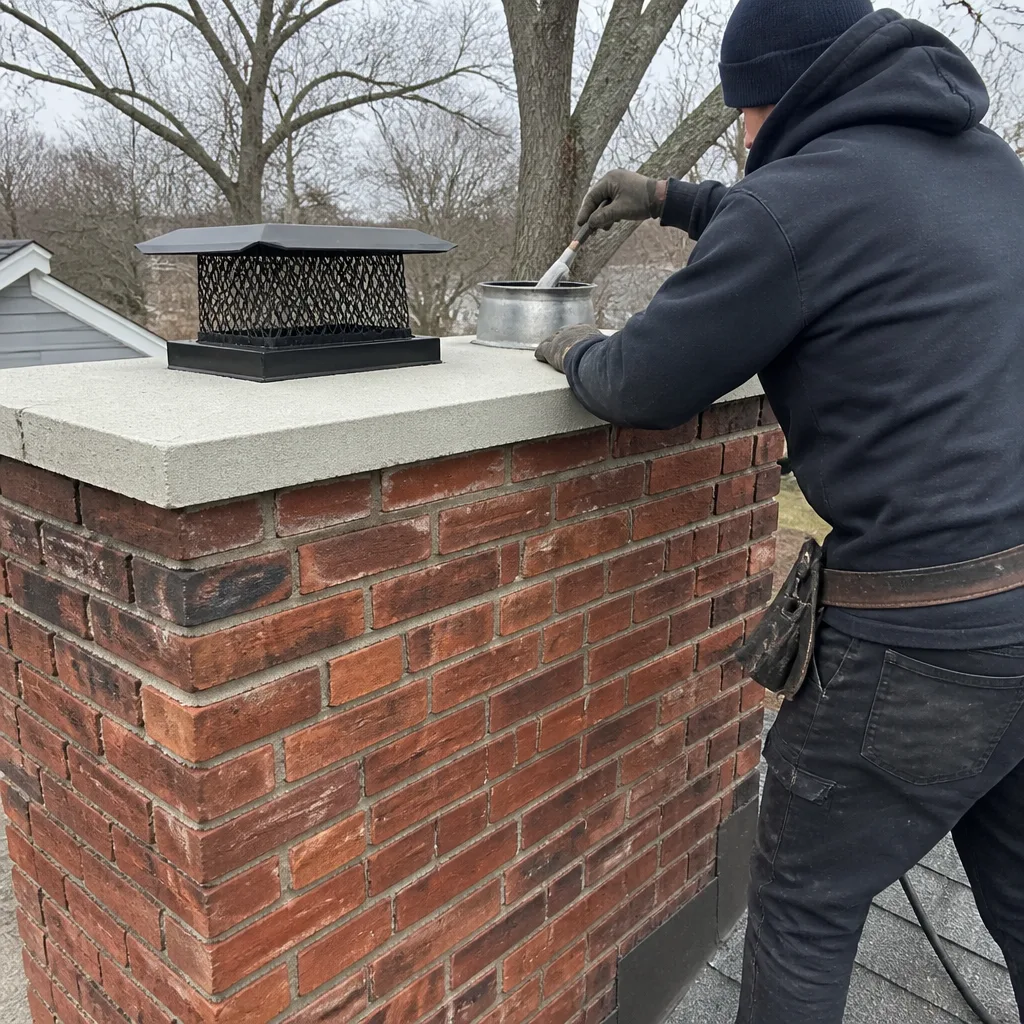
Level 1 sweep and inspection to the NFPA 211 annual standard - flue, crown, cap, and flashing checked and photographed
Chimney sweep logs do not sweep chimneys. They loosen some creosote - which then falls where a brush and vacuum still have to collect it.
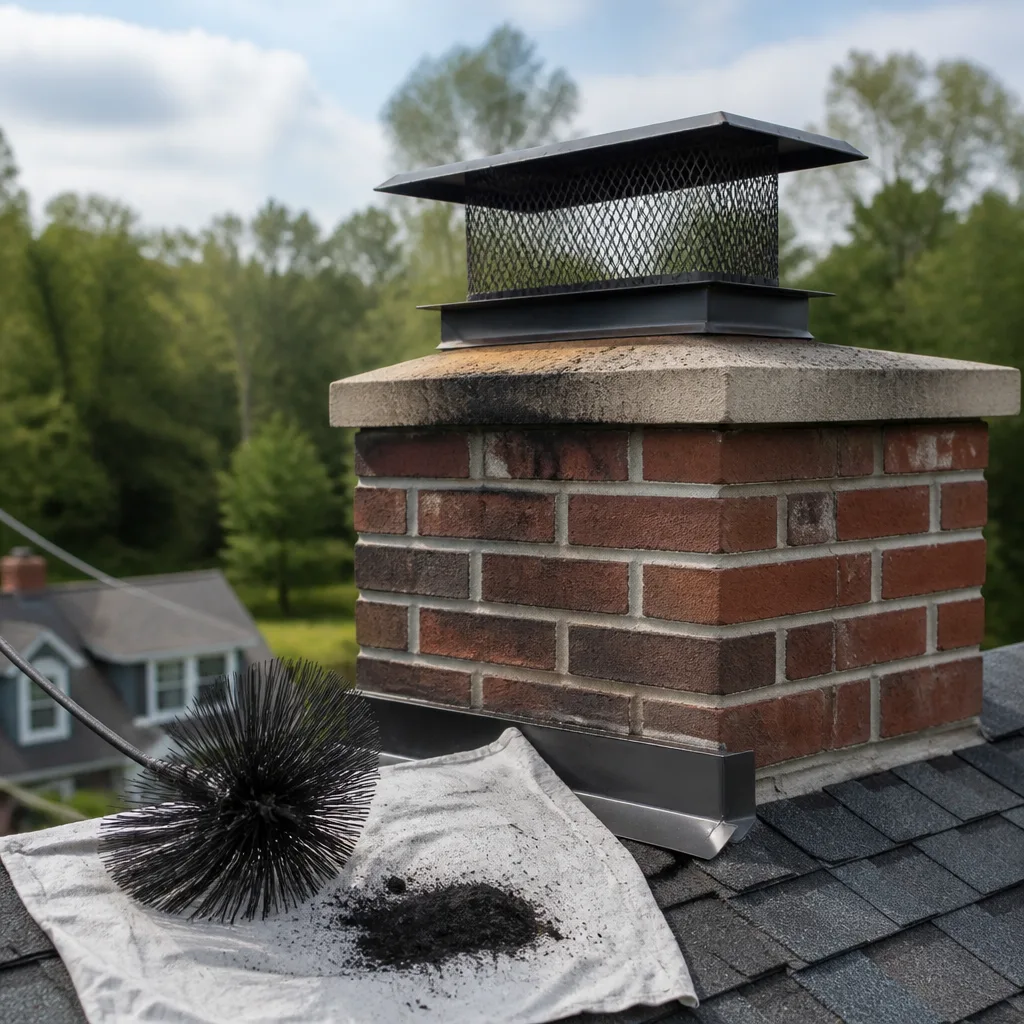
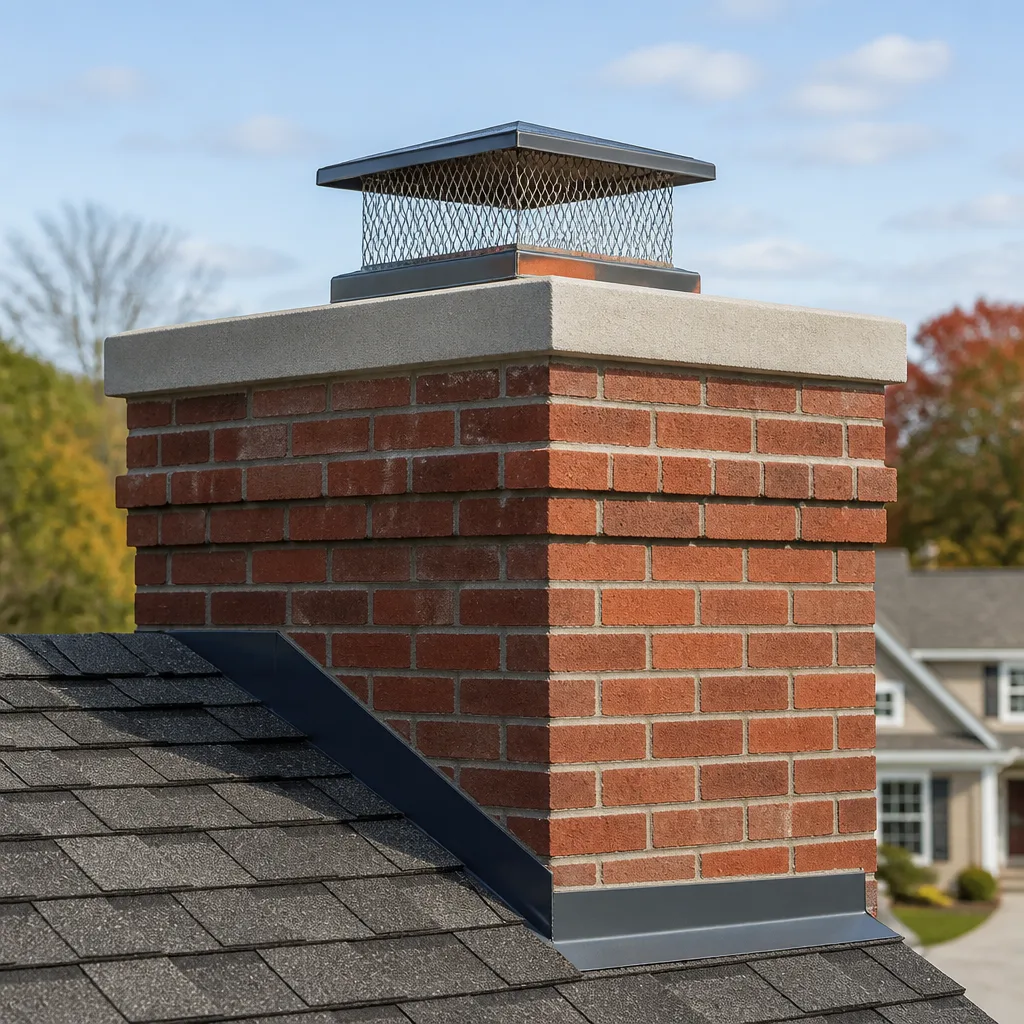
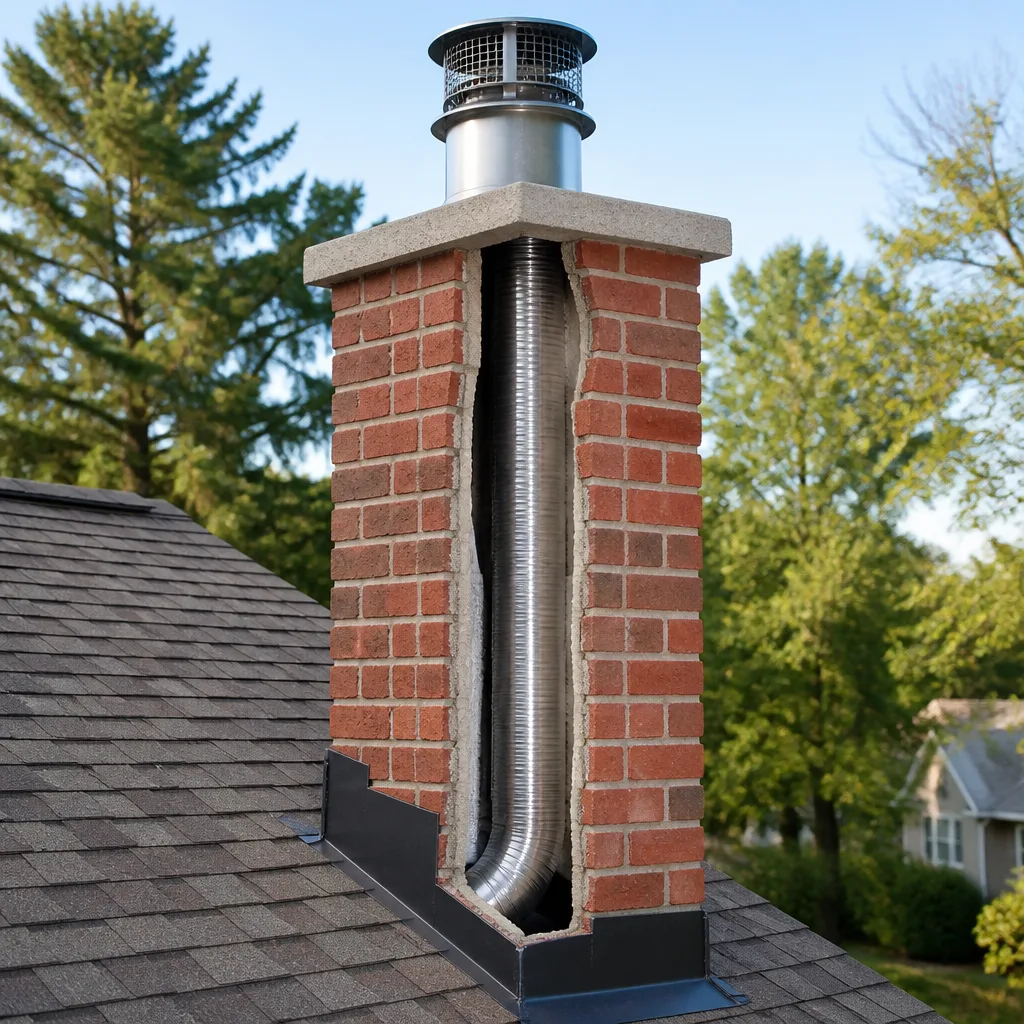
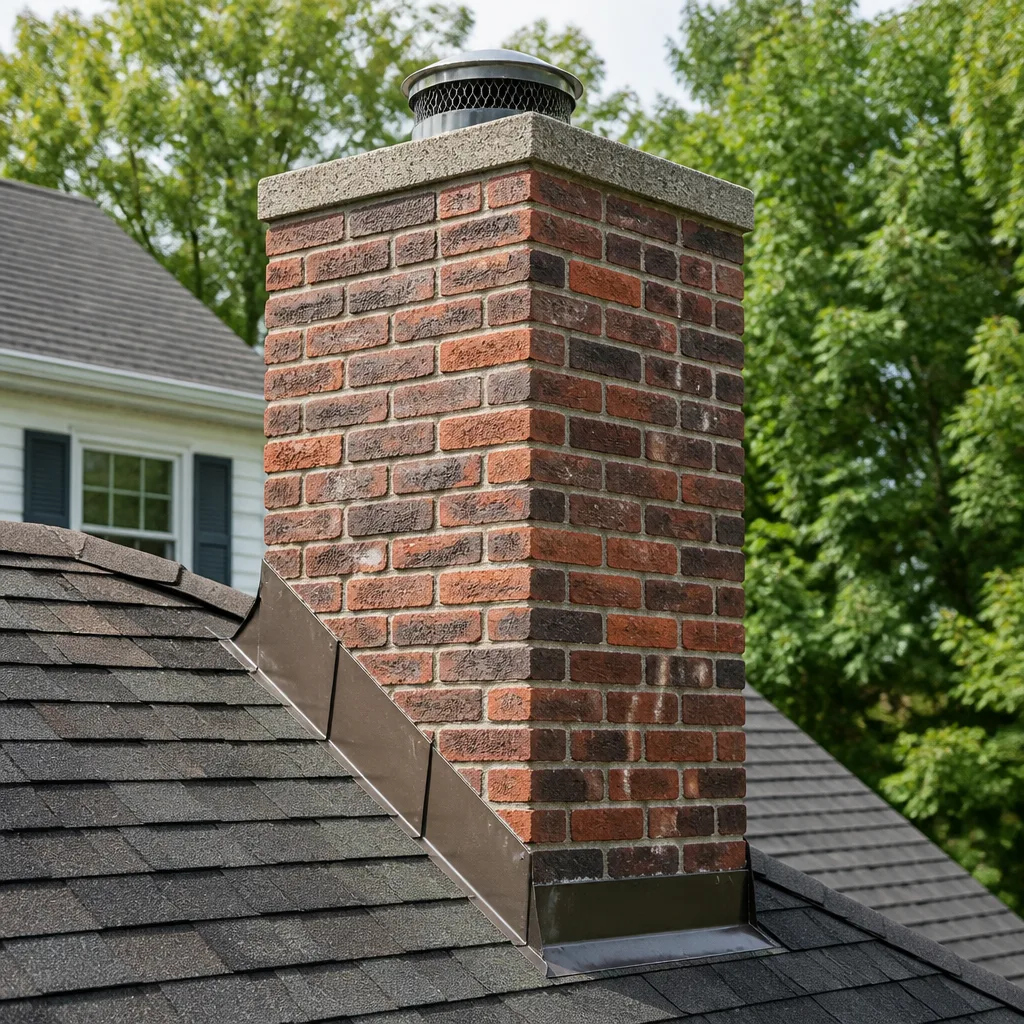
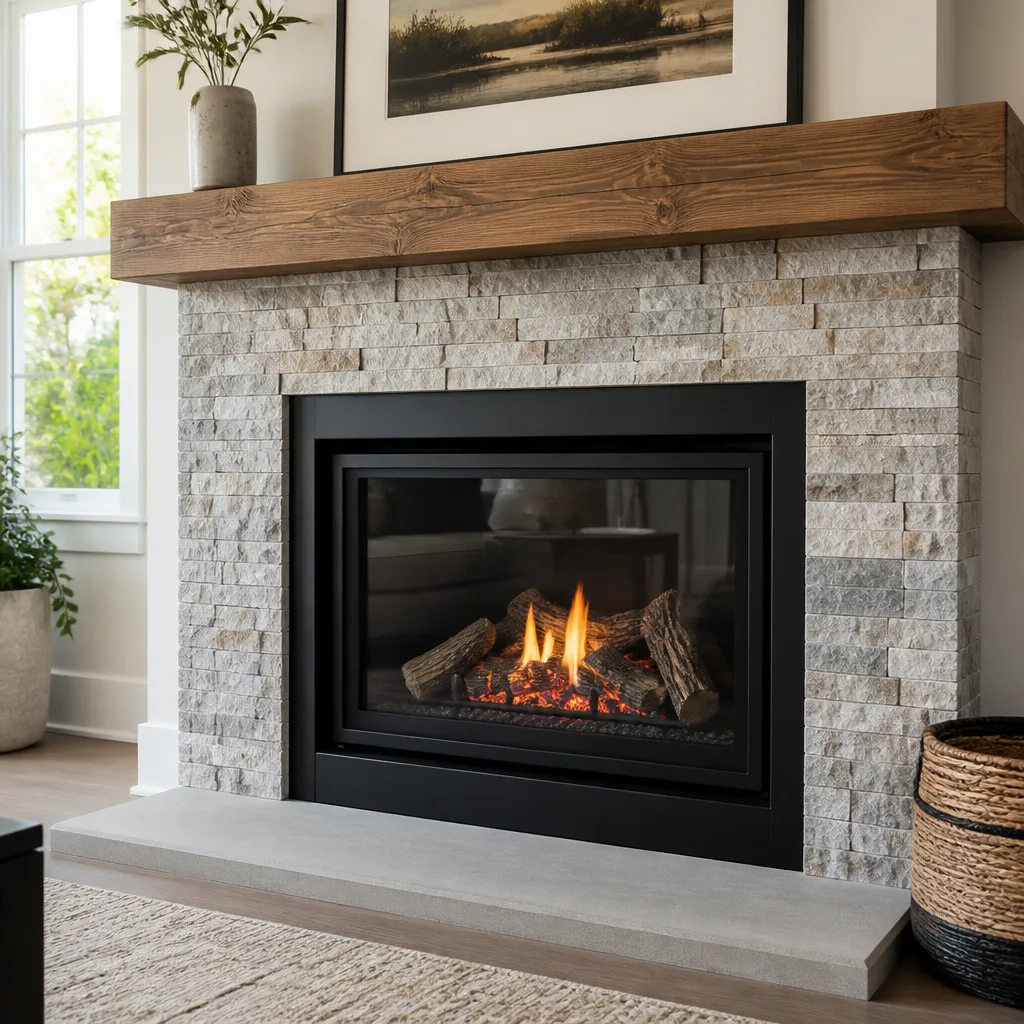
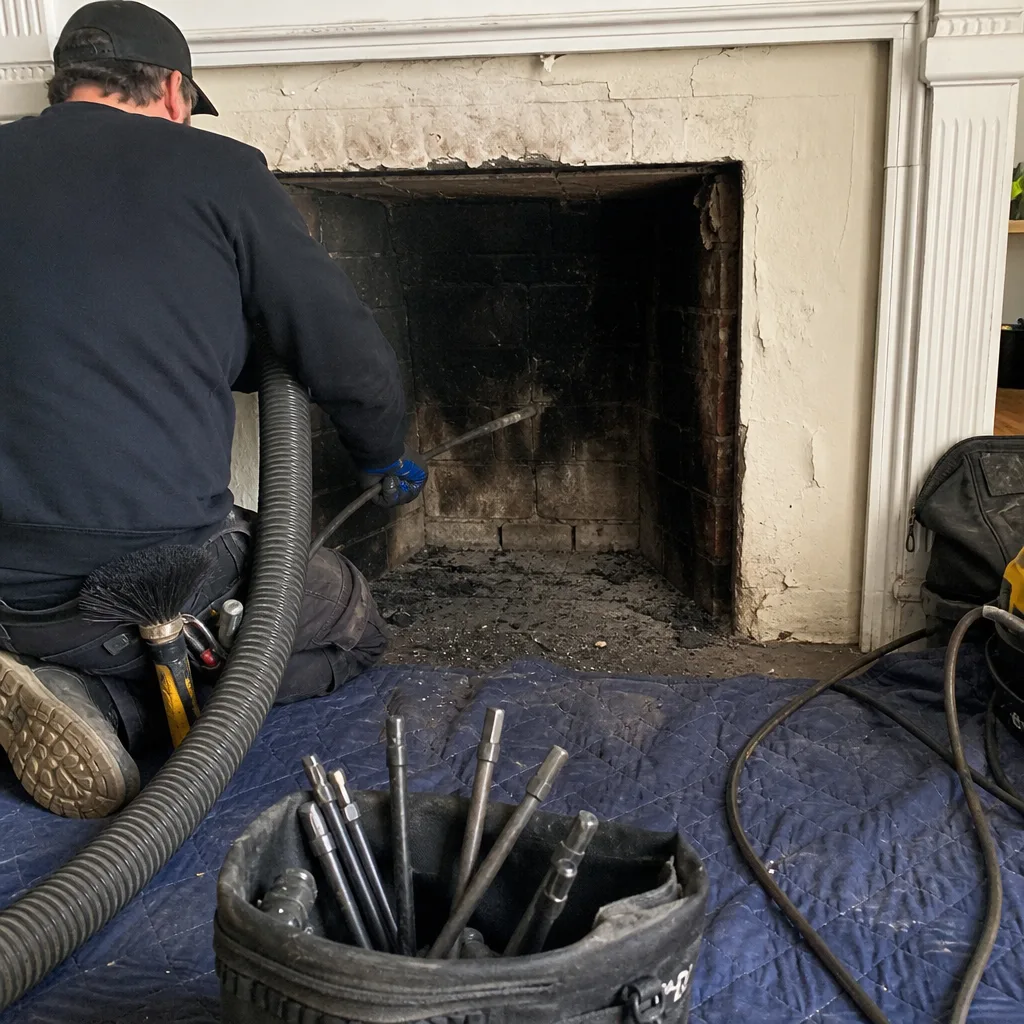 Before
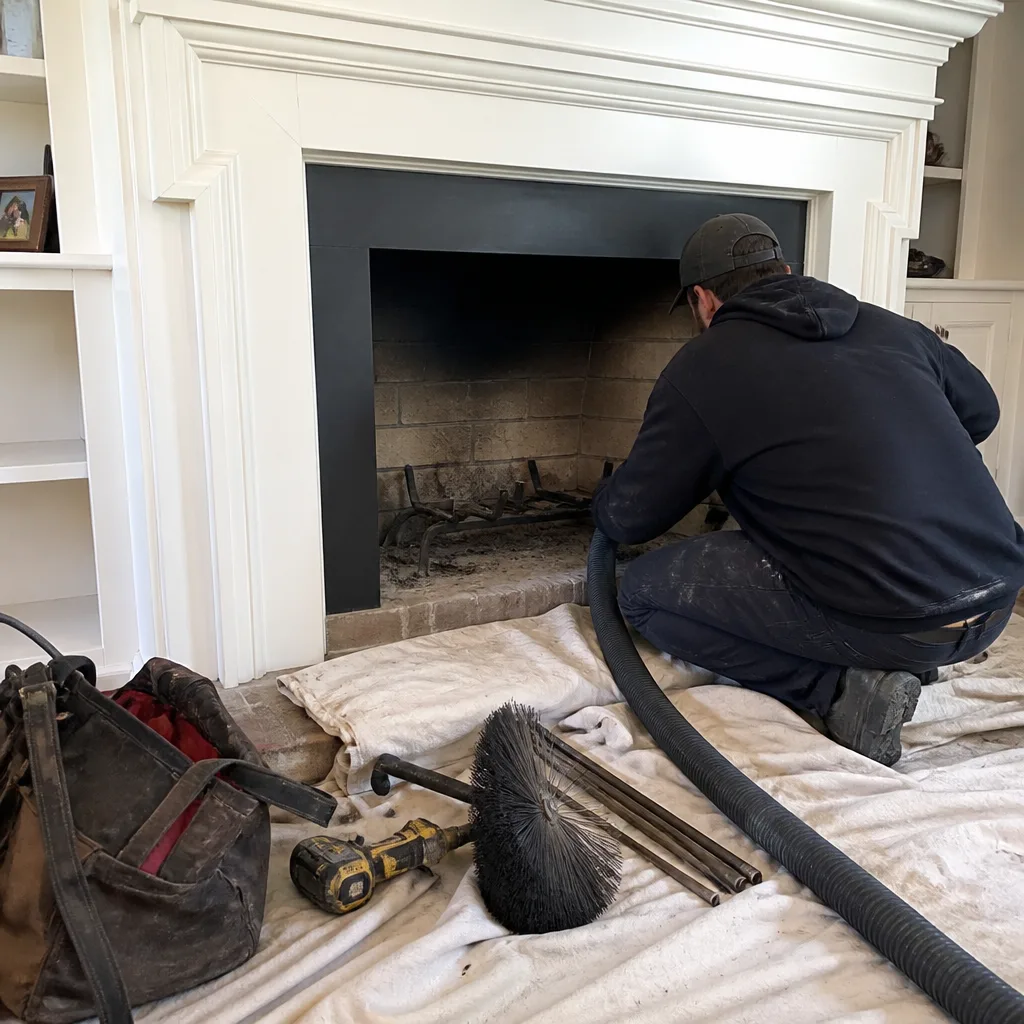 After
After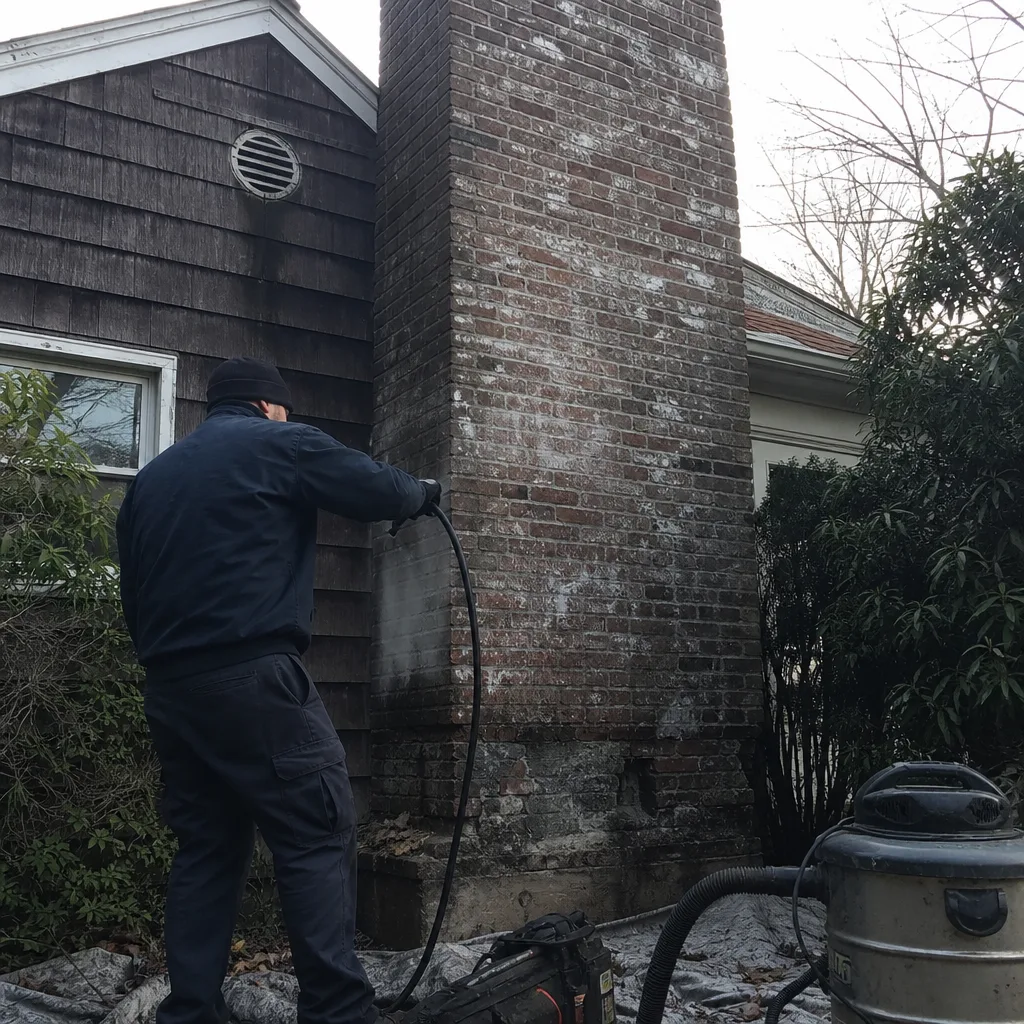 Before
 After
After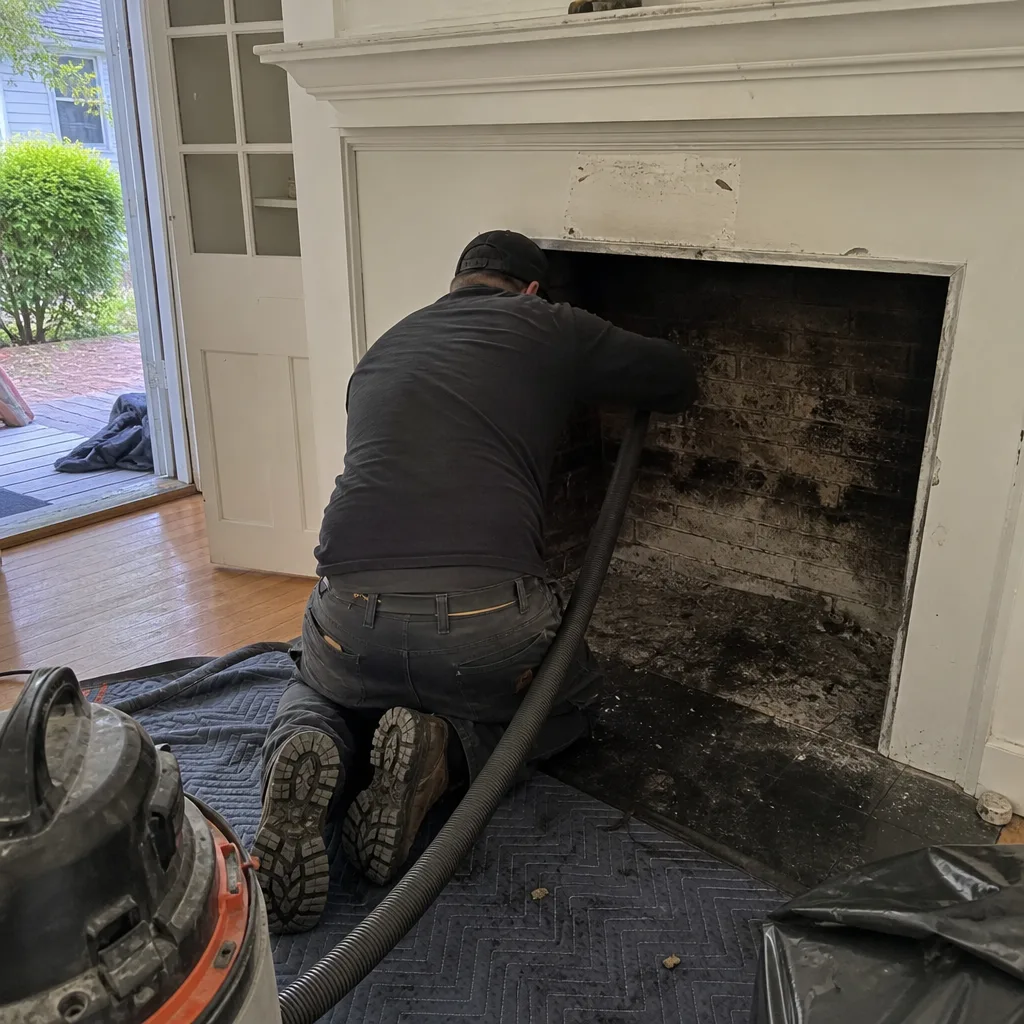 Before
 After
AfterThe Complete Guide to Chimney Cleaning in Southampton
Most chimney guides are written for the generic American homeowner. Southampton homeowners burn denser hardwood, open houses after months of vacancy, and live within miles of salt-laden air that accelerates mortar decay - none of that is in the national guides. In this guide, you’ll learn how Southampton’s coastal environment specifically affects your chimney, what a proper cleaning actually addresses here, and how to read a sweep’s report like someone who knows what they’re looking at. For year-round seasonal chimney care guidance, see our dedicated homeowner resource. We’ve been sweeping chimneys in Southampton for over 42 years, and the problems we see in beach-adjacent homes from Sag Harbor to Shinnecock Hills are not the problems you’ll read about in a national manual.
Quick Answer
Chimney cleaning in Southampton, NY typically costs between $199 and $349 for a standard Level I sweep with inspection, and should be performed annually for wood-burning fireplaces that see regular use. A proper Southampton-area cleaning addresses salt-air corrosion, heavy creosote from dense hardwoods like oak and locust, and moisture damage from seasonal vacancy - not just soot removal. Unsure whether to tackle this yourself or call a pro? Read our DIY vs Professional Chimney Cleaning: The Southampton Homeowner’s Decision Guide. Most cleanings take 45 to 90 minutes and include a photo-documented condition report.
Table of Contents
- Why Southampton Chimneys Are Different
- What Happens During a Professional Chimney Cleaning
- Level I vs. Level II Inspections: Which One Do You Need?
- Reading Your Post-Cleaning Report
- The Rental Vacancy Problem
- How Much Does Chimney Cleaning Cost in Southampton?
- How Often Should You Clean Your Chimney?
- Common Mistakes to Avoid
- When to Call a Professional
- Frequently Asked Questions
- The Bottom Line
Why Southampton Chimneys Are Different
Southampton sits on a narrow strip of land between Peconic Bay and the Atlantic Ocean. That geography creates chimney conditions you won’t find in guides written for Columbus, Ohio or even White Plains. Salt air travels inland on prevailing southwest winds, carrying chloride ions that attack metal components at rates inland sweeps rarely encounter.
We’ve pulled apart chimney systems in North Sea, Water Mill, and right along Meadow Lane where the stainless steel liners showed pitting corrosion after eight years that would take fifteen in a protected inland climate. The salt doesn’t just rust the cap. It works into the mortar joints of the crown, accelerates damper hinge fatigue, and degrades the seal on top-mount dampers. A Southampton chimney cleaning isn’t complete without inspecting for this specific deterioration pattern.
Then there’s the wood. Southampton’s mature oak and black locust stands produce some of the densest burning stock on Long Island. Homeowners who split their own from fallen trees in the Pine Barrens or source from local cordwood suppliers are burning wood at 25 to 30 million BTU per cord. That density matters because it burns slower and cooler in the initial phase, which produces more creosote than fast, hot burns. Stage-two creosote - the shiny, tar-like coating that flakes in curved sheets - is common in Southampton hearths. It’s harder to remove than the powdery stage-one soot and requires more aggressive brushing. In our experience, a Southampton fireplace burning oak four nights a week needs cleaning every cord and a half, not the two to three cords typical of softwood regions.
The seasonal vacancy cycle compounds everything. Many Southampton homes, especially from Southampton Village east toward Sagaponack and Bridgehampton, sit sealed from October through May. A sealed chimney with residual moisture and organic material becomes a microclimate. We’ve opened dampers in June to find efflorescence crystals on the firebox walls, musty odors that indicate bacterial growth on creosote deposits, and in some cases, small nests built in the flue during the vacancy months. The first fire of the season in a house that’s been closed is statistically the riskiest - the homeowner lights it assuming everything is as they left it, but the chimney has been changing.
What Happens During a Professional Chimney Cleaning
A proper chimney sweep is a systematic process, not a vacuum-and-go service. Here’s what happens when we arrive at a Southampton home:
- Pre-cleaning inspection and protection. We lay drop cloths from the hearth to the nearest hard surface, inspect the firebox for visible cracks or spalling, and check the damper operation. In Southampton homes, we’re specifically looking for salt corrosion on the damper frame and hinge pins.
- Chimney cap and crown assessment. Before any cleaning begins, we examine the exterior crown and cap from the roof or with a pole camera. Salt-air pitting, crown cracks wider than 1/8 inch, and cap mesh corrosion are documented with photos. If the cap is a Gelco or Famco model, we note the specific series for replacement compatibility.
- Flue brushing with appropriate tools. For stage-one soot, we use polypropylene brushes sized to the flue diameter. For stage-two creosote common in oak-burning Southampton fireplaces, we switch to flat-wire brushes or, in severe cases, mechanical chain whips. The tool matches the deposit - using too aggressive a brush on light soot damages the liner; too light a brush on glazed creosote leaves a fire hazard.
- Debris removal and HEPA vacuuming. All loosened material is collected with a high-efficiency vacuum equipped with HEPA filtration. We do not use shop vacs - the fine particulate from creosote requires sealed systems.
- Post-cleaning camera inspection. We run a chimney camera the full length of the flue, recording video and capturing still images of every joint, offset, and the chimney connector. This is where hidden cracks, liner gaps, or animal damage reveal themselves.
- Condition report and verbal review. Before we leave, we show the homeowner the photos, explain what we found, and note any items that can wait versus what needs attention before the next burning season. The written report follows by email within 24 hours.
Most jobs are completed in a single visit of 45 to 90 minutes. Our technicians are background-checked and uniformed, and we provide no-hassle upfront pricing - the number on the estimate is the number on the invoice.
Level I vs. Level II Inspections: Which One Do You Need?
The National Fire Protection Association defines three inspection levels, but for practical purposes, Southampton homeowners need to understand the difference between Level I and Level II.
A Level I inspection is the standard annual service. It’s a visual examination of readily accessible portions of the chimney exterior, interior, and connecting appliances. No tools are used to open or remove components. For a Southampton home with a fireplace that was cleaned last year, burned normal amounts of oak or locust, and shows no performance issues, Level I is appropriate.
A Level II inspection is required when:
- The property is changing hands (real estate transaction)
- The chimney suffered a chimney fire, lightning strike, or seismic event
- A new appliance is being connected or the fuel type is changing
- The chimney has not been used or inspected for more than 12 months, especially in seasonal Southampton homes
- There has been a malfunction or operational problem (smoke backup, odor, visible deterioration)
The Level II includes everything in Level I plus examination of accessible attics, crawl spaces, and basements, plus a video scan of the internal flue surfaces. In Southampton, we strongly recommend Level II for any home that sat sealed through a full off-season. The camera reveals what eyes cannot: hairline cracks in terracotta flue tiles, gaps at liner joints, and the early salt-corrosion pitting that precedes visible exterior damage.
Our Level II inspections end with photos the homeowner can see and a plain-English verdict - documented like an engineer, explained like a craftsman. We use professional-grade camera systems, and the report includes timestamped images with annotations. Nothing is recommended without camera evidence you can see for yourself.
Reading Your Post-Cleaning Report
A verbal “looks good” from a sweep is worth little if you need to prove condition to an insurance company, a buyer, or your own memory two years later. Here’s what a proper Southampton chimney report should include, and how to read it.
The photo log. Every significant image should have a location tag (e.g., “Flue tile 3, second floor level”) and a condition note. Look for photos of the crown from above, the damper assembly from below, the full flue scan, and the firebox floor. If your report has fewer than eight images for a Level II inspection, it is incomplete.
The condition ratings. We rate each component on a three-tier system: Serviceable (no action needed), Monitor (functional but showing wear; plan for future attention), and Repair Recommended (address before next burning season or immediately). A report that rates everything “Serviceable” without nuance, or everything “Repair Recommended” without prioritization, should raise questions.
The specific terminology. “Spalling” means the firebrick surface is flaking from moisture penetration. “Efflorescence” is the white powder of soluble salts migrating through mortar - common in Southampton’s humid, salt-air environment. “Glazed creosote” is the hardened, tar-like deposit that requires mechanical removal. “Thimble deterioration” refers to wear where the stovepipe enters the chimney. A good report uses these terms and explains them.
The action timeline. This is where Hearthstone’s approach differs from sweeps who treat every finding as urgent. We specify what can wait, what should be scheduled before the next season, and what requires immediate attention. A cracked crown in July can be scheduled for September. A separated flue liner with visible gaps needs to be addressed before any fire is lit.
Our reports are backed by the 90-Day Done Right Promise - in writing, no arguing. If something we cleared as Serviceable fails within that window, we make it right.
The Rental Vacancy Problem
Southampton’s economy runs on seasonal rental cycles that create a specific chimney hazard pattern. A house rented Memorial Day through Labor Day, then sealed until the following spring, has a chimney that sits dormant for eight to ten months with residual moisture and organic deposits.
Here’s what happens inside that sealed system:
- Moisture accumulation. Even with a supposedly closed damper, humidity migrates. In Southampton’s coastal climate, relative humidity inside a sealed home often exceeds 70 percent through winter. That moisture condenses on the cooler flue surfaces, reactivating acidic compounds in residual creosote and accelerating liner corrosion.
- Biological growth. Creosote is organic material. Given moisture and time, it supports mold and bacterial colonies that produce the musty odor many homeowners notice on first opening the damper. This isn’t just unpleasant - some species produce acidic byproducts that etch metal liners.
- Animal intrusion. A chimney without a functional cap is an inviting cavity. Squirrels, raccoons, and chimney swifts (a protected species) commonly occupy vacant flues. We’ve removed nests in June that contained material from the previous autumn - meaning the animal had been in residence all winter, compressing debris and blocking airflow.
- Freeze-thaw damage. Water that enters through a cracked crown or deteriorated mortar freezes in winter expansion cycles. Southampton’s temperature swings - sometimes 40 degrees in a January day - accelerate this damage compared to consistently cold inland climates.
The first fire of the season in a reopened rental property is the highest-risk moment. The homeowner assumes the system is as they left it. But the chimney has been altered by months of moisture, possible animal activity, and freeze-thaw stress. We recommend a Level II inspection before lighting that first fire, even if the chimney was swept the previous spring. The cost of inspection is modest compared to a chimney fire or carbon monoxide event.
For property managers and owners in Southampton Village, Water Mill, and Sagaponack, we offer scheduled pre-season inspections that can be booked during the vacancy months. This allows any needed repairs to be completed before the tenant or owner arrives expecting a working fireplace.
How Much Does Chimney Cleaning Cost in Southampton?
Pricing in Southampton reflects the specific conditions we face: heavier creosote from dense hardwoods, salt-air corrosion inspection, and the higher labor costs of Long Island’s East End. Here’s what you should expect to pay for professional service:
| Service | Price Range | What’s Included |
|---|---|---|
| Level I Chimney Sweep & Inspection | $199 - $289 | Standard cleaning, visual inspection, basic condition notes |
| Level II Sweep with Video Inspection | $289 - $349 | Full cleaning, camera scan, photo report, attic/crawl space check |
| Stage-Two Creosote Removal (Mechanical) | $150 - $250 additional | Chain whip or rotary cleaning for glazed deposits |
| Chimney Cap Replacement | $225 - $475 | Professional-grade cap, stainless or copper, installed |
| Crown Repair/Resealing | $350 - $650 | Crack repair, waterproof coating, salt-resistant sealant |
Several factors push Southampton pricing toward the higher end of these ranges:
- Hardwood creosote load. Oak and locust produce more aggressive deposits than the pine and fir common in national averages. More labor, more time.
- Salt-air component inspection. We spend additional time examining metal components for corrosion that inland sweeps can skip.
- Access challenges. Southampton’s mature landscaping, steep roof pitches in shingle-style homes, and tight property lines can complicate ladder and equipment placement.
- Seasonal demand compression. The viable sweeping season runs September through March. Demand spikes in October create scheduling premiums at some companies. We maintain flat pricing year-round.
Hearthstone’s standing offers include $50 off any repair over $250, a free second opinion on any written estimate, an $89 seasonal tune-up, and a permanent 5% senior and veteran discount. We provide no-hassle upfront pricing - the number on the estimate is the number on the invoice. Call (516) 619-2915 for an exact quote; estimates are free.
How Often Should You Clean Your Chimney?
The NFPA 211 standard states that chimneys, fireplaces, and vents shall be inspected at least once a year, and cleaned as needed. “As needed” is where Southampton specifics matter.
For a primary residence in Southampton burning oak or locust as the main heat source:
- Annual inspection minimum
- Cleaning every cord to cord-and-a-half of wood burned
- Level II inspection every third year regardless of apparent condition
For a seasonal home opened for weekends and holidays:
- Level II inspection before the first fire of each season
- Cleaning annually if any burning occurred, even if minimal
- Additional inspection if the property sat sealed through a full winter
For rental properties:
- Level II inspection between tenancies if fireplaces were used
- Annual inspection and cleaning minimum, documented for liability
- Cap and crown check before each rental season
These frequencies exceed what national guides suggest because they account for Southampton’s specific risk factors: salt-air corrosion, dense hardwood creosote, and vacancy-related moisture damage. A chimney that would be fine for two years in Kansas needs closer attention here.
We track service history for our regular Southampton customers and send reminder notices when inspection intervals approach. There’s no charge for the reminder, and no obligation - but we’ve found that homeowners who’ve experienced one chimney fire or carbon monoxide alarm don’t need convincing to stay current.
Common Mistakes to Avoid
- Hiring based on the lowest quote alone. In Southampton, a $99 sweep special often means a vacuum run up the flue with no inspection, no photos, and no report. The money saved disappears when undetected liner damage leads to a $4,000 rebuild.
- Assuming a new home is clean. We’ve found construction debris, mortar droppings, and even worker lunch remnants in chimneys of Southampton homes built during the 1980s boom. New construction does not equal clean flue.
- Burning unseasoned wood. Oak cut last spring and burned this winter contains 40 to 50 percent moisture. It burns cool, produces massive creosote, and can require twice-annual cleaning. Properly seasoned Southampton oak needs 18 to 24 months stacked with airflow.
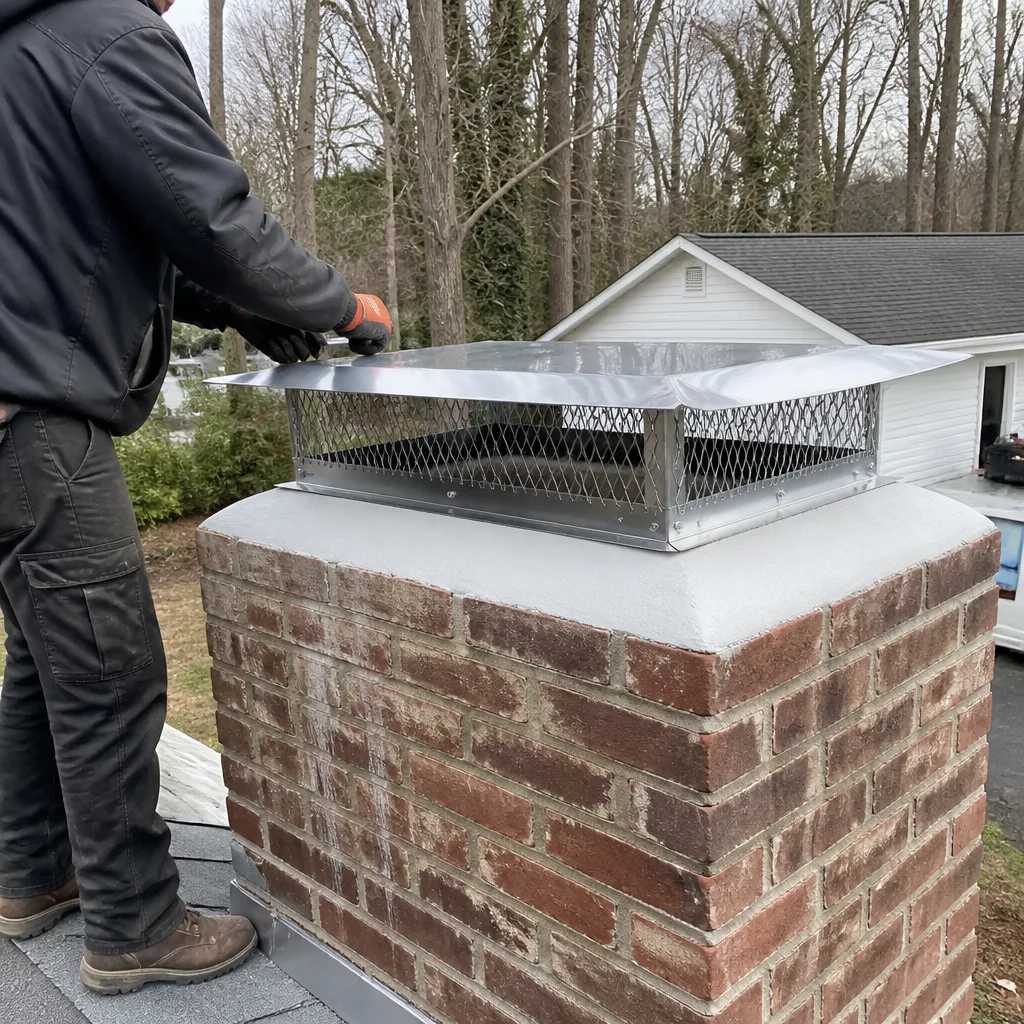
- Ignoring the cap. A missing or corroded cap invites rain, animals, and debris. In Southampton’s salt air, a standard galvanized cap may fail in three years. We install stainless and copper caps from Olympia Chimney and Copperfield that withstand coastal conditions.
- DIY cleaning without proper equipment. Hardware store brushes are sized for standard flues and lack the flexibility for offset chimneys common in older Southampton homes. More critically, without a camera inspection, you cannot see what the brush missed.
- Waiting for visible smoke problems. By the time smoke backs up into the room, the hazard has been developing for months. Annual inspection catches deterioration before it becomes an emergency.
- Neglecting the exterior. Southampton homeowners often focus on the firebox and ignore the crown, cap, and flashing. Salt-air degradation of these components allows water entry that destroys the system from the top down.
When to Call a Professional
Call a sweep immediately if you notice smoke entering the room, a strong tar odor during burning, visible cracks in the firebox, or white staining on the exterior brick. These are not maintenance items - they are active hazard indicators. The same applies if you’ve had a chimney fire, even a small one; the damage may be hidden inside the flue.
For Southampton homeowners reopening a seasonal property, schedule inspection before the first fire, not after. The cost of prevention is always lower than the cost of remediation, and in the case of carbon monoxide exposure, there is no remediation for the health consequence.
Hearthstone Chimney Co. offers free estimates in Southampton - call (516) 619-2915. A live person answers every call, 24 hours a day, 7 days a week. We’ll be there when we say, and we stand behind our work with the 90-Day Done Right Promise: in writing, no arguing.
Frequently Asked Questions
A standard Level I chimney cleaning and inspection in Southampton typically runs $199 to $289, while a Level II cleaning with video inspection ranges from $289 to $349. Heavy creosote removal, common with oak and locust burning, may add $150 to $250. Call (516) 619-2915 for an exact quote - estimates are free.
Not necessarily. A liner needs replacement when it shows separation at joints, visible corrosion holes, or cracks that penetrate to the outer wall - all conditions we document with camera evidence you can see. In Southampton’s salt-air environment, stainless steel liners from DuraFlex last longer than standard aluminum, but no liner lasts forever. We recommend replacement only when camera inspection confirms damage that affects safety; many liners show surface staining that does not compromise function.
Annual inspection is the minimum for any wood-burning system. For Southampton homes burning dense hardwoods like oak and locust, cleaning is typically needed every cord to cord-and-a-half of wood burned - often annually for primary residences, sometimes more frequently for heavy winter use. Seasonal homes should receive Level II inspection before the first fire of each season. Call (516) 619-2915 to schedule based on your specific burning pattern.
Skipped cleaning allows creosote accumulation, which restricts airflow and increases the risk of chimney fire - a rapid, high-temperature event that can crack flue tiles and penetrate to combustible framing. In Southampton’s coastal climate, skipped maintenance also means undetected salt corrosion and moisture damage that progresses from minor repair to major rebuild. The cost difference between annual cleaning and fire restoration is typically ten to twentyfold.
Musty odor indicates moisture-activated biological growth on residual creosote deposits, common in chimneys that sit sealed through humid months. Southampton’s coastal humidity accelerates this process compared to drier climates. The solution is thorough cleaning to remove the organic substrate, plus inspection for cap and crown leaks that allow moisture entry. A deodorizing treatment helps, but cleaning is essential - masking the smell without removing the source is temporary at best.
A sweep is the physical cleaning process - brushing, debris removal, and surface preparation. An inspection is the evaluative process - examining structure, components, and clearances to identify defects and hazards. They are often performed together, but they are distinct services. A sweep without inspection is incomplete; an inspection without cleaning may be obscured by soot deposits. Hearthstone combines both with photo documentation for a complete service record.
The Bottom Line
Chimney cleaning in Southampton is not a generic maintenance task. Salt air from Peconic Bay and the Atlantic corrodes metal components faster than inland guides suggest. Dense oak and locust produce creosote that demands more aggressive removal. Seasonal vacancy creates moisture and biological hazards invisible from the hearth. A proper cleaning addresses all of this with documented inspection, not just soot removal. Explore more guides & resources on protecting your Southampton home.
The key takeaways: burn only seasoned hardwood, inspect annually with photo documentation, prioritize Level II inspection for reopened seasonal homes, and read your sweep’s report for specific condition ratings with timelines. The cheapest sweep is rarely the least expensive over the life of your chimney.
Hearthstone Chimney Co. has served Southampton and surrounding communities for over 42 years. We document every inspection with photos and a plain-English verdict, back every job with the 90-Day Done Right Promise in writing, and answer the phone with a live person 24 hours a day. For chimney cleaning, repair, or an honest assessment of what your system needs, contact our Southampton chimney sweep team or call (516) 619-2915.
Written by Russell Haines, Owner at Hearthstone Chimney Co., serving Southampton since 2014.